welcome to the

Supporting your path to parenthood

Supporting your path to parenthood

Australia’s integrative natural health project.

Modern families. Thoughtfully considered.

Conception isn’t as simple as it once was. With approximately one in six Australian couples experiencing fertility challenges, many individuals and couples now turn to assisted reproductive technologies such as IVF and ICSI as part of their fertility journey.

For some, the story doesn’t unfold with their own eggs or sperm—even with IVF or other assisted technologies. Egg and sperm donation are increasingly part of the conversation, offering alternative pathways for those navigating more complex reproductive realities.

OUR APPRoACH

The Donor Project provides education and supportive guidance for individuals and couples exploring donor egg conception as one possible pathway to parenthood.

We focus on informed decision-making, supporting people to navigate fertility clinics and donor egg options, and encouraging open, thoughtful conversations about donor-conceived families.

Founded by Dr Miranda Myles, The Donor Project is informed by personal experience and delivered with a compassionate, respectful, and evidence-based approach. Our aim is to support education, reflection, and informed discussion around donor egg conception and donor-conceived families.
The Donor PrOject has two
very important aims:

Education

Guidance to explore local, imported, and international donor egg options, with clear, evidence-informed education to help make sense of donor egg conception and donor-conceived families—without the overwhelm.

Preparation

To support preconception preparation ahead of donor-egg transfer—nutritionally, physically, and emotionally—using considered dietary, lifestyle, and nutritional strategies to help people feel prepared and well-supported alongside their clinical care.
“Preconception health matters — for every parent, every pathway”

Healthy parents. Thoughtful preparation. Informed pathways.

DR MIRANDA MYLES

FAQ’S
The Donor Project is an education-led space created by Dr Miranda Myles for individuals and families exploring donor conception.

Its focus is on education and preparation—helping people make sense of donor egg and donor sperm pathways, navigate fertility clinics, and get practically and emotionally prepared alongside their medical care.

This work is practitioner-led, evidence-informed, and designed to sit alongside—not replace—the care provided by fertility specialists and medical practitioners.

The Donor Project provides education and preparation alongside fertility care. Medical treatment and reproductive outcomes remain under the care of registered fertility specialists and clinics.

  • For many people, the path to parenthood does not unfold as expected.

You may have been told that your egg reserve is low, that menopause is approaching earlier than anticipated, or that genetic or medical factors mean conception using your own eggs or sperm may not be possible. Others may be navigating donor conception due to medical treatment, genetic considerations, or as same-sex intending parents.

Whatever has brought you here, it is common to experience feelings such as grief, sadness, anger, fear, or overwhelm. For many, donor conception represents not only a medical decision, but the loss of a hoped-for genetic connection — and that deserves acknowledgement and space.

It is okay to grieve what you thought your journey would look like.

At the same time, families are created in many ways, and over time it is care, safety, and connection — not genetics alone — that shape family life.

You are not alone, and education and support are available as you explore what comes next.

The aim of The Donor Project is to support people to approach donor egg IVF informed, prepared, and supported—rather than feeling rushed or navigating it alone.

We focus on education and preconception preparation, supporting nutritional, physical, and emotional readiness ahead of donor egg transfer, alongside the medical care provided by your fertility team.

We provide guidance to help you understand the donor landscape, explore available options, and navigate pathways in a considered, informed way.

No guarantees. No pressure. Just clear education, grounded support, and a steady presence alongside you as you explore building your family a little differently.

I’m Dr Miranda Myles, founder of The Donor Project.

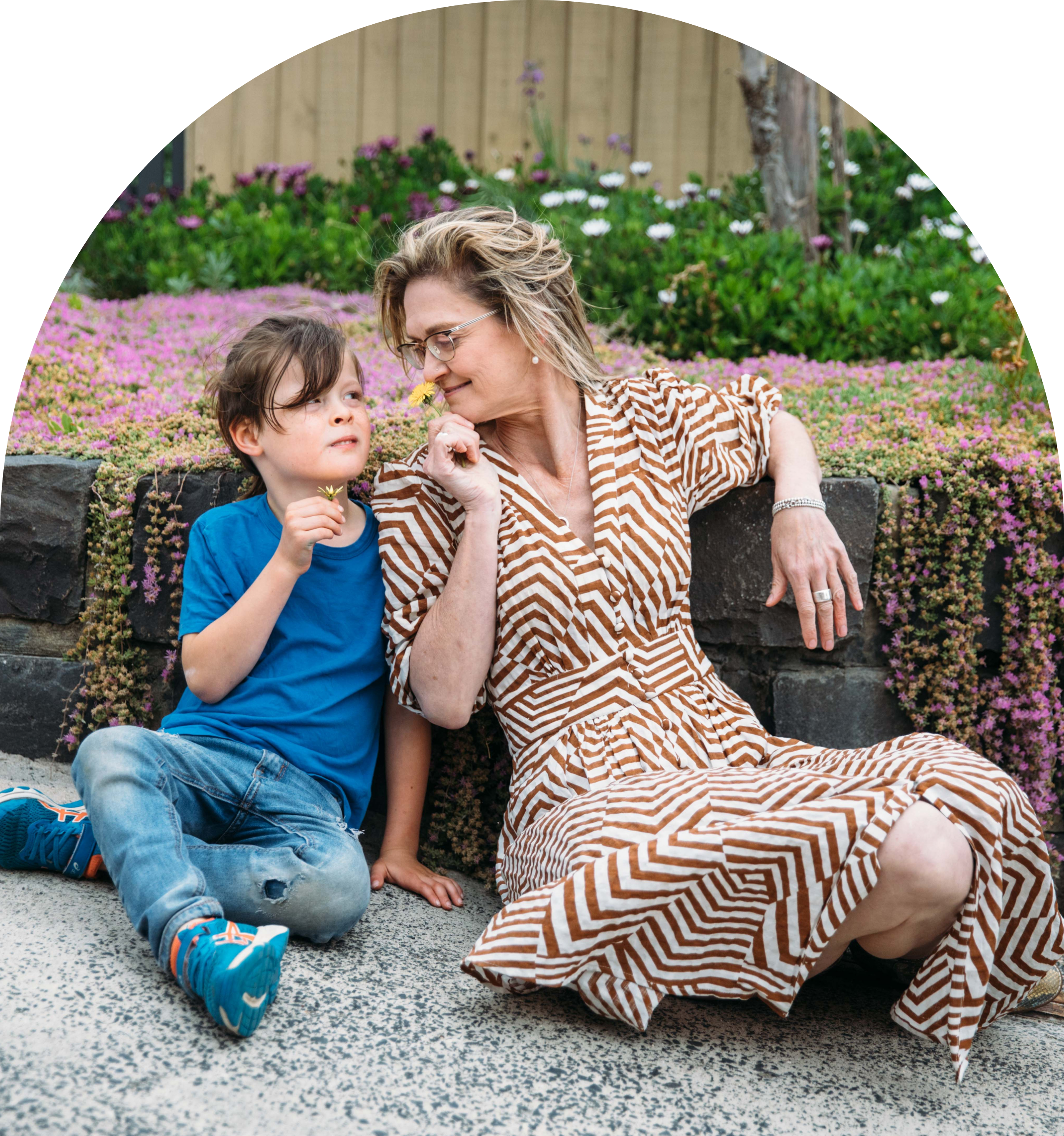
My path to motherhood wasn’t straightforward. After years of unexplained infertility, I became a mother to my children, Charlie and Matilda, through donor egg conception, using two different donors. It was complex, emotionally challenging, and very different from what I had imagined.

That lived experience is what shaped The Donor Project. I know there is no single “right” way to build a family, and no two journeys look the same. My role is not to promise outcomes, but to offer clear education, informed guidance, and considered support as people navigate donor conception alongside their medical care. Families are created in many ways. The Donor Project is one place where your experience can be acknowledged as you explore what comes next.

My own path to parenthood included:

  • 8 years of fertility treatment
  • 3 different egg donors
  • 13 embryos
  • 9 rounds of IVF
  • 3 cycles using my own eggs
  • 6 cycles using donor eggs

Treatment across multiple overseas clinics, including Thailand and Malaysia. I bring together professional expertise and lived experience to support informed reflection and thoughtful preparation as you move forward.

Paths to parenthood exist.

Using donor eggs — including from younger donors — does not guarantee pregnancy or first-cycle success. Fertility is nuanced, and outcomes vary widely between individuals.

In donor egg IVF (DEIVF), sperm provides the genetic contribution for the non-egg-providing partner, meaning sperm health is one of several factors fertility specialists may consider as part of treatment planning.

IVF outcomes can be influenced by many variables, including embryo development, uterine receptivity, hormonal and immune factors, genetics, and the endometrial and vaginal microbiome. There is no single factor, and no way to predict outcomes with certainty.

More than one IVF cycle is common, and every journey looks different.

Our role is to provide integrative, supportive care alongside fertility treatment, with a focus on education, general reproductive health, lifestyle considerations, and emotional wellbeing throughout the process.

Medical investigations and fertility treatment are always managed by registered fertility specialists. Integrative support complements medical care and does not guarantee pregnancy.

Every fertility journey is individual, and outcomes cannot be predicted.

Egg donation is a pathway to parenthood where eggs from a donor are used to create embryos through IVF, which are then transferred to the uterus of the person who will carry the pregnancy (or a gestational carrier).

Finding an egg donor in Australia can be challenging. While most major IVF clinics offer egg donation services, availability may be limited and waiting times can be lengthy due to a small donor pool.

There are generally three pathways people may explore when seeking an egg donor:

  • Finding a known donor

  • Importing donor eggs from overseas

  • Undertaking treatment overseas

Egg donation arrangements undertaken in Australia must comply with state and territory legislation. In most jurisdictions, egg donation is required to be a known donation, meaning donor details are recorded on the relevant state Donor Register. This allows donor-conceived individuals to access identifying information about their donor once they reach adulthood, in accordance with local laws.

Regulations vary between states and territories, and individuals are encouraged to seek advice from their fertility clinic or relevant government authority to understand current requirements.

Learn more about this topic on our blog.

Egg donation isn’t for everyone. It’s a big decision — and one that’s often considered when other pathways haven’t worked or aren’t possible.

  • People may explore egg donation for many reasons, including:
  • Low ovarian reserve or concerns about egg quality
  • Being an older intending parent
  • Previous IVF cycles that haven’t resulted in pregnancy using own eggs
  • Premature or early menopause
  • Genetic conditions they don’t wish to pass on
  • Ovarian damage due to illness or medical treatment
  • Absence of ovaries
  • Male same-sex couples or solo parents using a gestational carrier

Every journey is different, and there’s no single reason — or right time — to consider this path. It’s also normal to grieve the loss of a genetic connection you once imagined. Those feelings deserve space and compassion.Families are built in many ways — and love, care, and connection are what shape them over time.

You are the Mum

It’s remarkable that more than one person can contribute to the creation of one human life. A donor egg is exactly that — a single cell. An important contribution, but one part of a much larger process. An embryo requires fertilisation, development, and time.

And then there is the person who carries the pregnancy. Pregnancy involves the physical environment, the physiological changes, and the sustained relationship that unfolds over time. It is experienced in the body of the person who carries and gives birth.

Egg donation is a contribution.

Pregnancy is a relationship.

For many families, motherhood is shaped through pregnancy, care, and lived experience — not genetics alone.

Learn more about this topic on our blog.

There is no one-size-fits-all approach to egg donation.

Choosing between local (Australia-based), overseas treatment, or imported donor eggs involves different legal, financial, and emotional considerations, and each option comes with its own advantages and limitations.

The focus is on making an informed decision that aligns with individual values, circumstances, and longer-term family considerations.

Fertility isn’t just about eggs — sperm has a role to play too.

Embryo development involves both partners, which is why a whole-of-couple perspective makes sense. This isn’t a solo effort.

Learn more about this topic on our blog.

MY PODCAST

The Donor Project Podcast provides education and considered discussion for individuals and couples exploring donor egg conception as one possible pathway to parenthood.

The podcast aims to broaden conversations beyond infertility, support informed reflection on family-building options, and encourage thoughtful dialogue about donor-conceived families and identity. Because every woman deserves the opportunity to be a Mum and every man a Dad.